Why Drain Problems Repeat in Salt Lake City
Most recurring drain problems come from the same handful of issues. Kitchen lines build up grease and food waste. Bathroom drains collect soap residue, hair, and scale. Older homes can have aging drain lines that snag debris more easily. In some properties, tree roots or pipe shifts create a bigger problem farther down the line.
Salt Lake City homes can also deal with mineral-heavy water and older plumbing systems, which means a "quick fix" clog today can come back again if the real restriction is not cleared. Restaurants and other businesses see the same pattern even faster — grease-heavy commercial kitchens are the most common repeat offender we visit on commercial plumbing calls.
Hard Water Makes Salt Lake City Drains Clog Faster
Utah has some of the hardest water in the country, and it shows up in your drains. Dissolved calcium and magnesium build scale on the inside of pipes, which narrows the line and gives grease, soap, and hair something to grab onto. That is why two identical homes can have completely different clog histories — the one with untreated hard water clogs first.
Scale buildup is gradual, so most homeowners never connect it to their drain problems. If your showerheads crust over and your water heater rumbles, your drain lines are scaling too. A water softener or filtration system stops new scale from forming, and our guide to the best water softeners for Utah hard water covers what works in local conditions.
Signs You Need Professional Drain Cleaning
A plunger is fine for a simple clog, but repeated symptoms usually mean the problem is deeper in the system. Common warning signs include:
- Slow drains in more than one fixture
- Gurgling sounds after water runs
- Bad odors coming from sinks, tubs, or floor drains
- Water backing up in the tub when another fixture is used
- A clog that returns a few days after DIY treatment
When multiple fixtures are involved, the issue may be beyond a branch line and closer to the main drain or sewer line.
What Makes a Drain Clog More Than a Drain Clog
Homeowners often think drain cleaning means one sink is slow. In reality, repeated clogs can be an early warning sign for a more expensive repair. A main line issue can affect showers, toilets, kitchen drains, and laundry drains at the same time. If that is happening, it is better to investigate early than wait for wastewater to back up into the home.
If you are seeing whole-home symptoms, our sewer and water main replacement page is a useful next step.
When DIY Methods Make the Problem Worse
Chemical cleaners can be rough on older pipes and often do very little for a deep obstruction. Repeated use can also make a later repair messier and more hazardous. If a drain keeps slowing down after store-bought products or repeated plunging, the problem usually needs better diagnostics instead of more chemicals.
Do You Need a Drain Plumber or a Regular Plumber?
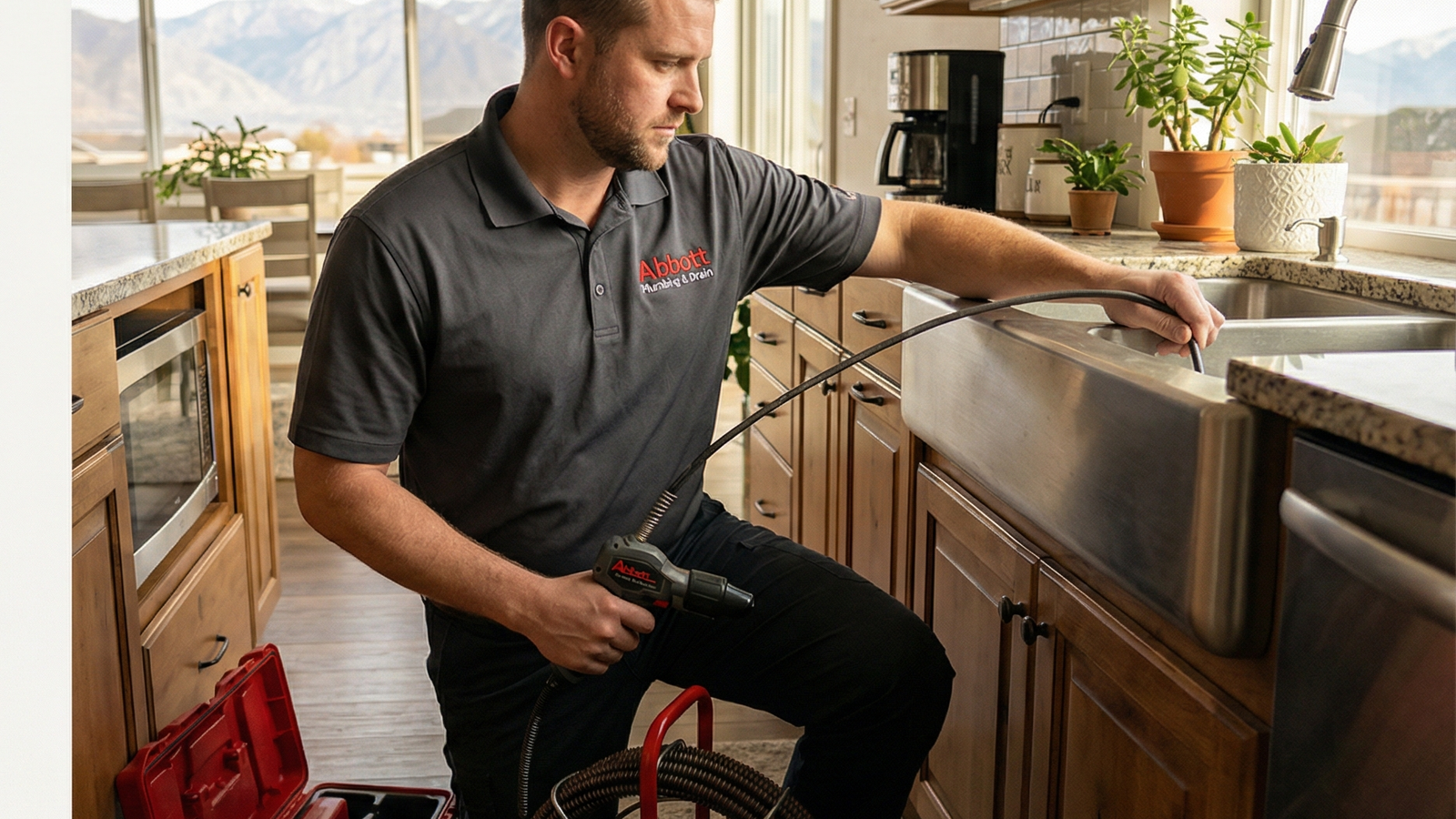
A drain plumber is a plumber who works on clogs, drain lines, and sewer lines every day — with the equipment that work requires. Clearing a deep blockage properly takes a motorized auger sized for the line, a sewer camera to confirm what caused the clog, and jetting equipment for grease and scale. A general handyman with a hand snake will punch a hole through the clog; the restriction stays, and so does your problem.
Abbott is both — it is in the name. Our drain cleaning service covers everything from a single slow sink to full main-line blockages, and because we are licensed plumbers, we fix what the camera finds instead of handing you off to a second company.
How Much Does Drain Cleaning Cost in Salt Lake City?
The honest answer: it depends on where the clog is and how it has to be cleared. A single accessible fixture drain is the least expensive job. Main-line clogs cost more because they take heavier equipment, and jetting or root cutting sits above that. A camera inspection is sometimes added when the clog keeps returning, since it shows exactly why.
Be careful with the "$49 drain cleaning" offers you see online. That teaser rate usually covers one pass with a small cable on one easy-access drain — the visit price grows once the technician is in your home. Ask any company for the real price of your specific job before they start. We quote up front: request an estimate and you will know the number before any work begins.
What If Your Drain Backs Up at Night or on a Weekend?
Sewage does not keep business hours. If wastewater is coming up through a floor drain, a tub, or the lowest toilet in the house, stop running water immediately — every fixture you use adds to what is backing up. Then call. A main-line backup left overnight turns into flooring, drywall, and disinfection costs that dwarf the plumbing bill.
Abbott handles exactly this situation. Our emergency plumber service covers Salt Lake City, Tooele, and the surrounding areas for backups, sewage smells, and drains that quit all at once.
What Salt Lake City Homeowners Should Do First
If one sink is slow, stop using it heavily and avoid adding more grease, food waste, or debris. If more than one fixture is acting up, reduce water use across the house until the line can be checked. If you notice sewage odor, bubbling toilets, or water coming up from a lower drain, call quickly. Those are the kinds of signs that can turn into cleanup and restoration costs if ignored.
Related Services That Support This Topic
Drain problems often overlap with other plumbing work. If the clog exposed a leak, visit our leak repair page. If the issue is part of a broader household plumbing problem, our residential plumbing page is a good next step. If you need local service, our Salt Lake area page is here: plumber in Salt Lake City, UT.
When to Call Abbott Plumbing & Drain
If your drain keeps clogging, if more than one fixture is affected, or if you are worried about a sewer line issue, it makes sense to bring in a plumber before the backup gets worse. Fast help matters most when a problem is escalating, not after the lowest drain in the house starts overflowing.
Drain Cleaning Questions We Hear Most
How often should drains be professionally cleaned?
For most homes, only when there is a symptom — slow drains, odors, or gurgling. Homes with known root intrusion or heavy scale benefit from a preventive cleaning every year or two, which is far cheaper than an emergency backup.
Can tree roots really get into a sewer line?
Yes, and it is one of the most common causes of repeat main-line clogs in older Salt Lake City neighborhoods. Roots enter through pipe joints and cracks, then catch everything that flows past. Cutting them clears the line; a camera inspection tells you whether the pipe itself needs repair.
Do one-time drain treatments fix recurring clogs?
No. If a clog comes back within weeks, something is still in the line — scale, roots, a sag in the pipe, or buildup that was punched through rather than removed. Recurring clogs are a diagnostic problem, not a plunger problem.
Does Abbott handle urgent drain emergencies?
Yes. We take emergency drain and sewer calls during our service hours (Monday-Friday 8am-5pm and Saturday 10am-5pm) across Salt Lake City, Tooele, and nearby areas. If wastewater is backing up into your home, call (801) 262-0399 right away.
Need Drain Cleaning in Salt Lake City?
Abbott Plumbing & Drain helps homeowners with repeated clogs, drain backups, sewer concerns, and everyday plumbing problems across Salt Lake City and nearby service areas.
Get an Estimate Call (801) 262-0399